
Why are pencils hexagonal?
Short answer
Most pencils are hexagonal because the flat sides stop them rolling off a desk and give your fingers something to grip. Faber-Castell says the shape replaced round pencils for exactly that reason. The hexagon also suits the factory: pencils are cut from glued wooden slats, and six-sided pencils can fit more per slat than round ones.
Published · Last verified · 11 sources
The six sides are there mainly so the pencil stays where you put it. Faber-Castell, the German pencil maker, says the profile of wood-cased pencils "was changed from round to hexagonal/triangle because they were constantly rolling off the table" [2]. The flats also give your fingertips something to press against, and the shape happens to suit the way pencils are cut out of wood, which is part of why it became the default for school and office pencils. Like the hole in a pen cap, it's a small design decision on an everyday desk object that most people never notice.
What's wrong with a round pencil?
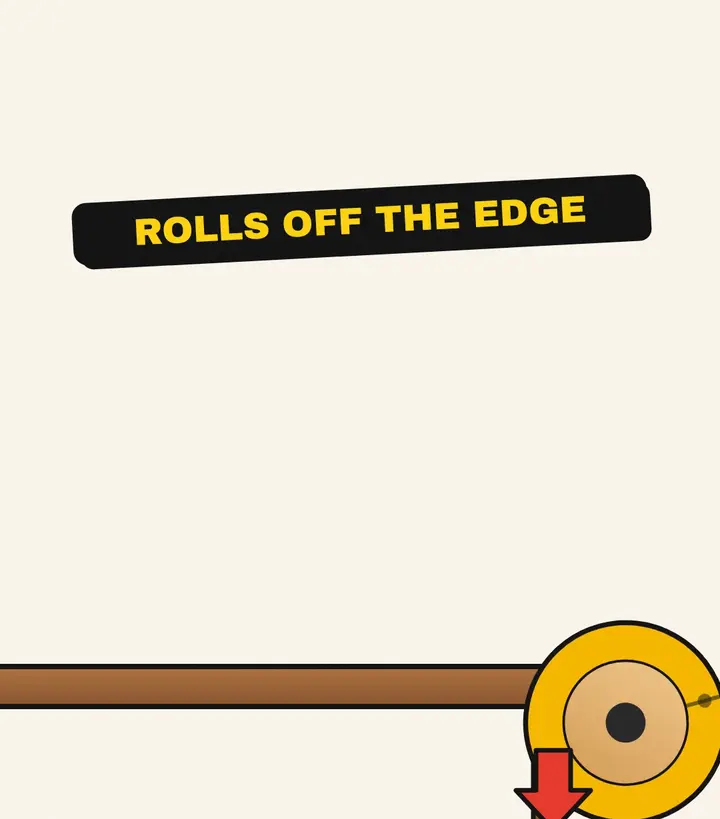
A cylinder touches a flat surface along one thin line, so a small knock or a slight slope is enough to set it rolling. A hexagon lies on a whole face. Before it can roll, it has to be tipped up onto an edge, which takes a real push.
That is the case Faber-Castell makes for the shape. Its FAQ calls the hexagon "currently the most commonly used cross-section shape for standard applications in schools and offices" and says it "enables easier gripping of the pencil during use and prevents the pencil from rolling off the table" [1].

Why six sides, and not three or four?
Faber-Castell says wood-cased pencils are made and sold worldwide in three main shapes: round, hexagonal and triangular [1]. The triangle is the most deliberate grip shape. In the normal writing position a pencil is held by the thumb, index finger and middle finger, and with three sides "each finger has a larger contact area," which the company says allows "fatigue-free writing." That is why the triangle is now recommended for beginners learning to write. Triangular pencils still end in a round cone at the tip, so they fit an ordinary sharpener [1].
The hexagon sits between the round and the triangular pencil: it still has flat faces for the fingers to rest on, but six small ones instead of three wide ones.
Pencil makers have long cared about those flats for another reason too: they are where the name goes. A U.S. patent from 1907 covers a pencil "angular in cross-section," whether "triangular, square, hexagon, or of other than round shape," with tiny serrations cut into the edges so it wouldn't slip in the hand or out of a pocket. The inventor kept the serrations short on purpose, to leave the flat surfaces "upon which the name of the maker or other advertising matter is printed" readable [7]. Ridged edges for grip are an idea pencils share with the ridges on coins, though coins got theirs for a very different reason.
Rectangular and other unusual shapes still exist for special jobs. Musgrave, a pencil factory in Tennessee, lists its barrel styles as "Round, Hex, Jumbo, Carpenter, Bridge, and Golf" [3], and CalCedar, which supplies the wooden slats pencils are made from, sells special slat sizes for "long carpenter pencils" and "more ergonomic shape pencils such as triangular or large rounds" [4].
How are pencils made, and where does the shape come from?
A wood-cased pencil is not drilled. Musgrave describes it as a sandwich: "a single graphite core sandwiched between two slices of wood, held together with glue." Flat wooden slats go through a grooving machine, the cores are laid into the grooves with glue, a second grooved slat goes on top, and the stack is clamped overnight. Then the sandwich is fed into a cutting machine that divides it into individual pencils, which later get 4 to 10 coats of paint [3]. Faber-Castell shows the same principle in its own factory around 1861 and says it now makes over 2.3 billion wood-cased pencils a year [2].
Every pencil cut from one sandwich lies side by side with its neighbors, so the width each finished pencil takes up decides how many fit across a slat. CalCedar says its standard slats "can yield from 3 to 10 pencils per slat sandwich depending upon finished pencil dimensions," and that its widest slats are 71 or 73 mm wide, with yields varying by pencil size and "tooling selection" [4].
Do hexagonal pencils really save wood?
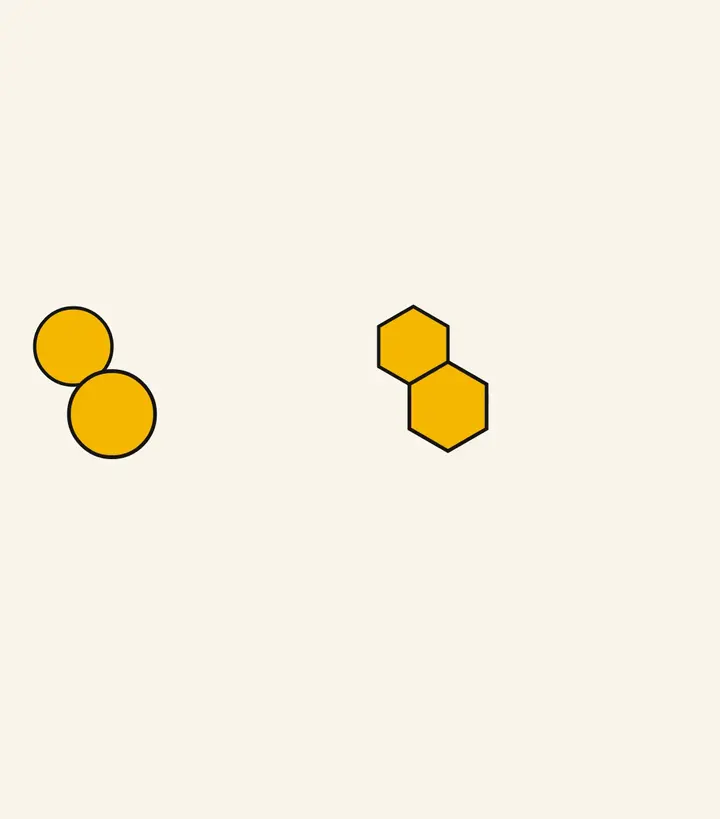
They can. Charles Berolzheimer, CEO of CalCedar, put a number on it in an interview with the news site 11Alive: "By having a hexagonal shape, you could get an extra pencil out of a standard width of slat. A typical slat for pencils produces maybe eight round pencils, but nine hexagonal pencils" [5].
Simple geometry shows why. Suppose a hexagonal pencil measures the same across its corners as a round pencil does across its diameter. Measured across its flats, the hexagon is only about 87% as wide (the cosine of 30°). Nine hexagons lying flat side to flat side then need about 7.8 round-pencil widths, so they fit in the space of eight round pencils. That is our arithmetic, not a manufacturer's figure. Real yields depend on the exact pencil size and the cutters used [4].
Pencil shop owner Caroline Weaver tells the history the same way: "when pencils were handmade, they were made round," and once American makers mechanized the work, "they figured out it was easier and less wasteful to do a hexagonal pencil, and so that became the standard" [6].
Round pencil
Hexagonal pencil
Why are some pencils still round?
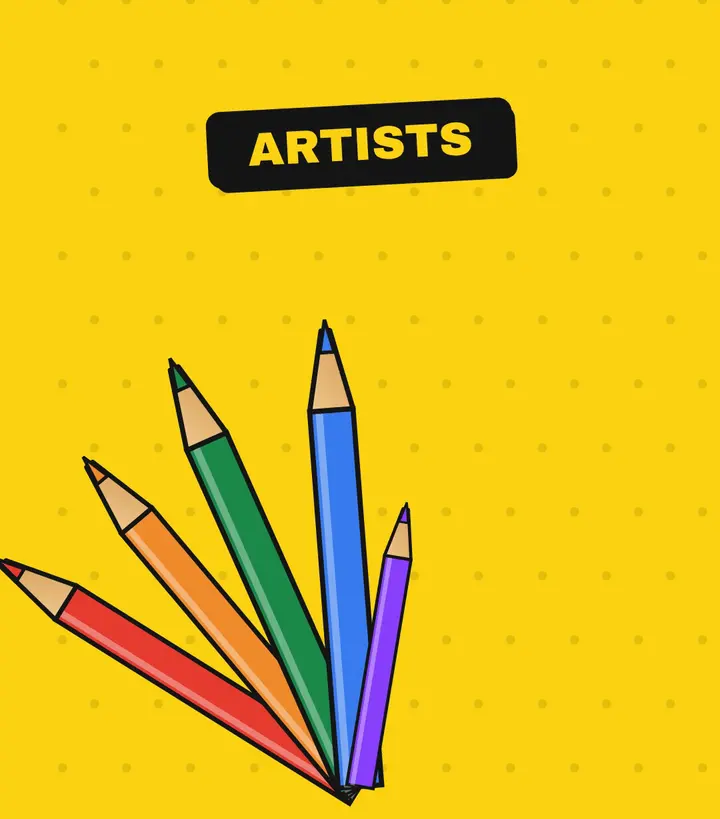
Round barrels never disappeared. Berolzheimer told 11Alive that round pencils are usually for artists, while the six-sided pencil is the best choice for general use [11]. Faber-Castell's explanation for the round shape, being able to turn the pencil so the point wears evenly, is about how the pencil is used in the hand, not about where it rests [1].
Why are pencils yellow?
The yellow look is usually traced to a single pencil. Koh-i-Noor Hardtmuth, based in České Budějovice in today's Czech Republic, says that in 1888 Franz Hardtmuth "launched the production of the yellow graphite pencil KOH-I-NOOR 1500 in 17 gradations." After "the global success of the yellow pencil 1500," the Koh-i-Noor name was added to the company name in 1894, and in 1900 the pencil won a Grand Prix in Paris [9]. Weaver calls it "the world's first yellow pencil," painted with 14 coats of yellow and with its end dipped in 14-carat gold [6]. Other brands soon followed, and yellow became what a "normal" pencil looks like [10].
Sources
- 1.FAQs: Pens and Pencils. Faber-CastellPrimary. Accessed October 8, 2026.
- 2.Pencil manufacturing through the ages. Faber-Castell (Singapore)Primary. Accessed October 8, 2026.
- 3.How a Pencil is Made. Musgrave Pencil CompanyPrimary. Accessed October 8, 2026.
- 4.Cedar Product Range (Incense-cedar pencil slats). California Cedar Products Company (CalCedar)Primary. Accessed October 8, 2026.
- 5.Why Are Pencils Hexagonal?. IFLScience. Accessed October 8, 2026.
- 6.Why the pencil is perfect (transcript). TED (Caroline Weaver, Small Thing Big Idea). Accessed October 8, 2026.
- 7.US Patent 847,579: Pencil (1907). U.S. Patent Office, via Google PatentsPrimary. Accessed October 8, 2026.
- 8.US Patent 7,503,716: Writing instrument with roll-preventing eraser. U.S. Patent and Trademark Office, via Google PatentsPrimary. Accessed October 8, 2026.
- 9.History. Koh-i-Noor HardtmuthPrimary. Accessed October 8, 2026.
- 10.Why Are Pencils Yellow?. Mental Floss. Accessed October 8, 2026.
- 11.Ever Wonder Why Pencils Are Usually Hexagonal? There Are Actually a Few Reasons. Distractify. Accessed October 8, 2026.
Last verified: . Spotted an error? See our editorial policy and corrections.
Video transcript
Round pencils have one big problem. Put one on a desk, and it rolls straight off the edge. A six-sided pencil stays put. Six sides are also easier to grip between your thumb and two fingers. And hexagons pack tightly, so they can be cut from wood with little waste. Artists often use round pencils anyway, because theirs don't travel much. But for everyone else,


